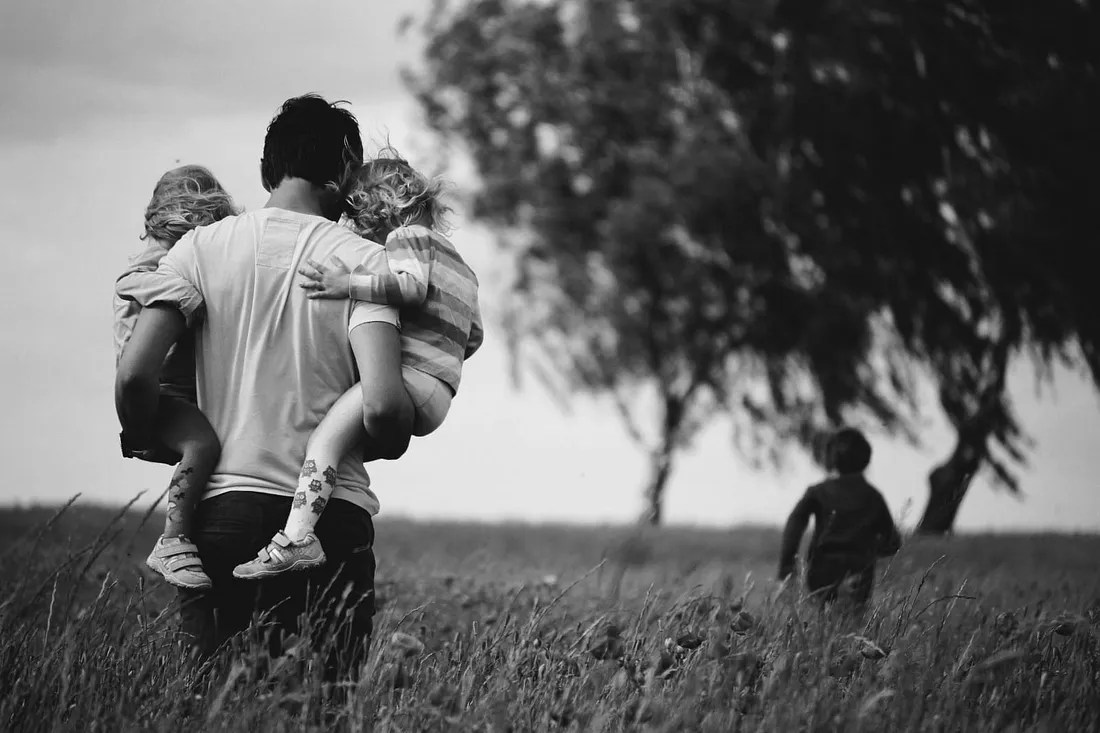
When life pushes you down, push back with purpose
Now, I’ll have you know I’m not the kind of writer to sugarcoat the bitter pills of life, nor am I the kind of therapist to tell you it’ll all be sunshine and rainbows without a damn lot of hard work. If you like your emotional journeys neatly packaged and tied with a bow, go join your local Instant Gratification Anonymous support group. You’ll find no such shortcuts in any of my stories.
I like my personal growth like I like my therapy sessions: deeply uncomfortable, yet profoundly transformative.
I know what you’re thinking, “Lee, after all that you’ve been through, how the hell do you even get out of bed in the morning, let alone talk about ‘profound transformation’?”
Well, my friend, sometimes when life strips you bare, you find an unexpected strength in the cold, hard ground beneath your feet. For me, that ground was the desolation of parental alienation that started in 2016.
Now, I’m not the kind of person to mince words when it comes to the messy realities of life, especially when children are caught in the crossfire. So, let’s get straight to it: parental alienation is a cruel form of psychological abuse where one parent, often fuelled by bitterness and a desperate need for control, manipulates a child into irrationally rejecting the other parent. It’s not just a child deciding they prefer one parent over another; it’s a systematic, insidious campaign that brainwashes them, twisting their love into fear or hatred, and erasing a once-loving bond. It’s watching your own children, once full of warmth for you, parrot accusations that aren’t theirs, a heart-breaking performance where the puppeteer pulls the strings of their innocent minds, leaving the alienated parent grieving for a relationship that’s been stolen, often right before their eyes.
They say what doesn’t kill you makes you stronger. I say what doesn’t kill you makes you very, very angry, and sometimes, that anger is just the fuel you need to build something better.
The years following the loss of my relationship with my children were a wilderness. The depression was a constant companion, a heavy cloak that threatened to smother every spark of hope. Spending in excess of £30,000 on legal fees to fight for my children, only to be met with a system that seemed to favour stereotypes over evidence, left me financially and emotionally bankrupt. It felt like I was punching smoke, leaving no mark, making no difference. My psychiatric nurse training had given me the tools to understand the what and the why of what was happening to my children — the false memory imposition, the emotional transference, the devastating long-term risks to their mental health. But understanding didn’t stop the ache in my chest, the grief for children still alive but lost to me. It’s a unique kind of torture, this living bereavement.
I tried to climb back up, but the familiar rungs of my old life felt slippery, coated in the residue of false accusations and public shaming. The very community I lived in, once home, now felt like a minefield of whispered judgments. It would have been easy to stay down, to let the darkness consume me. But the unwavering love of that small, fierce circle of friends and family was a lifeline. They saw me, not the caricature painted by a vengeful ex-partner. They kept telling me to say more, to speak my truth, to not let this silence define me.
And then, something shifted. Call it stubbornness, call it a desperate need to find meaning in the wreckage, or call it the quiet, insistent voice of my love for my children. I realized I couldn’t change their mother’s actions, nor could I force the system to see the truth. But I could change myself. I could take this unimaginable pain, this lived experience of a system failing parents and children, and turn it into something purposeful. It was a long shot, like trying to win the lottery with a ticket you found on the street, but what did I have to lose?
I decided to qualify as a psychotherapist. People looked at me like I’d finally gone completely mad. “Aren’t you burnt out already, Lee?” they’d ask. “You’re clearly suffering from ‘to rest syndrome’!” I just smiled. They didn’t understand. This wasn’t about rest; it was about rebirth. It was about turning my deepest wound into my greatest strength, to help others navigate the very hell I’d survived.
The journey was arduous. Late nights studying, grappling with complex theories, and confronting and overcoming my own demons in the process. It was like climbing a new, even steeper mountain, but this time, I had a compass forged in my own suffering. I learnt to sit with discomfort, to truly listen, not just with my ears, but with every fibre of my being, recognising the echoes of my own pain in the stories of others. When I finally qualified, it wasn’t just a piece of paper; it was a testament to resilience, a beacon of hope for a future I thought was lost.
And then my amazing partner, V, came into my life during this time, a woman of incredible empathy and vision. She saw not just my passion and my lived experience but also my potential, and together, we dreamt bigger. V also carries her own lived experience of parental alienation, and she’s currently pursuing her doctorate in counselling psychology, with her thesis dedicated to this very topic. This means that between the two of us, we not only have a deep and nuanced understanding of parental alienation, but we’re also profoundly passionate about helping those affected by it.
And so we co-founded Say More Therapy, a therapy service built on the principles of active listening, compassion, and the power of shared experience. Our mission? To create safe spaces for people to articulate their struggles, to “say more” than they ever thought possible, and to find their path towards healing.
One of the cornerstones of Say More Therapy, and my personal passion project, is the provision of therapy groups specifically for parents affected by parental alienation. These aren’t just support groups; they’re therapy groups led by me, a therapist who has walked that very fire since 2016. I know the sting of false allegations, the agony of contact denial, the frustration with a system that often misunderstands. And I also know that you are not alone, that your pain is valid, and that healing, though hard-won, is possible. We talk about the emotional impact, the practical challenges, and most importantly, we equip parents with strategies to safeguard their own mental well-being while continuing to hold hope for their children. It’s a space where truths are spoken, validated, and where a new kind of family, a community of shared understanding, begins to form.
Life has a funny way of pushing you to your limits, only to reveal the vast reserves of strength you never knew you possessed. I still grieve for the lost years with my children, and the pain is a shadow that never fully leaves. But now, it’s a shadow I walk alongside, not one that consumes me. I’ve rebuilt, not just a life, but a purpose. And every day, in every group session, every conversation, I hope that my story, and the stories of others, will eventually reach my children, reminding them that their dad never left, and that the love, always, says more.
If you’ve been affected by this much misunderstood form of abuse in any way I’d love to hear from you in the comments below, let’s say more about parental alienation.
And if you’re an alienated parent, grandparent or other member of the family and are feeling lost, unheard, and need a safe space to navigate your way through this, please join our PA therapy group waiting list, and if you’d like to find out more visit our PA therapy group FAQ page.
Originally published in Medium publication The Swipe, 3rd july 2025.
 Lee Serpa Azevado